
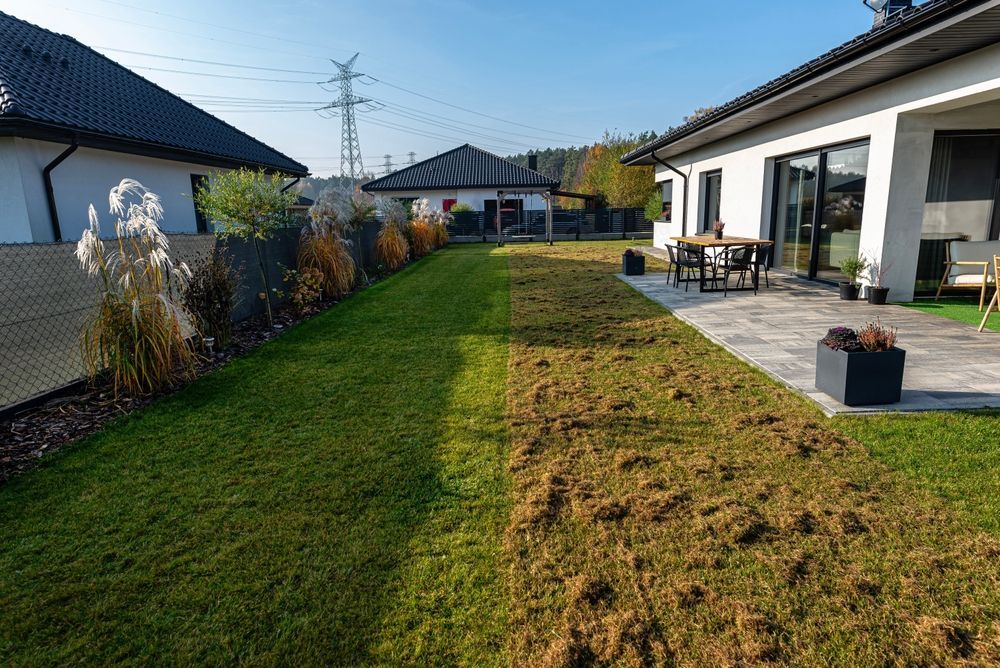
Open Up Soil and Fill In Thin Turf
Aeration and overseeding services that improve lawn density and resilience in Winterville, North Carolina.
Your lawn in Winterville can develop compacted soil from foot traffic, equipment use, or clay content that restricts water and air movement to grass roots. When soil stays compacted, roots grow shallow, turf thins out, and your lawn struggles to recover from heat or drought. Greener Lawns provides aeration to relieve that compaction and overseeding to fill in bare or thin areas, giving your grass the conditions it needs to establish a thicker, more durable surface.
Aeration uses a machine that pulls small plugs of soil from your lawn, creating openings that allow air, water, and nutrients to reach the root zone. Overseeding introduces new grass seed into those openings and across thin areas, which helps fill gaps and improve turf coverage. This combination is especially beneficial for lawns with heavy foot traffic, uneven growth, or visible wear patterns. The service is typically recommended during key seasonal windows in fall or spring when soil temperatures and moisture levels support seed germination and root development.
If your lawn in Winterville has thin spots, compacted soil, or weak turf that does not recover well, contact Greener Lawns to schedule aeration and overseeding.
What Changes After Aeration and Overseeding
The aeration process begins with a core aerator that removes small soil plugs across your lawn, leaving them on the surface to break down naturally. Greener Lawns makes multiple passes to ensure even coverage, especially in high-traffic or compacted areas. After aeration, seed is spread using a broadcast spreader, and a starter fertilizer is applied to support germination. In Winterville, where soil conditions and rainfall patterns vary, seed selection is matched to your grass type and the time of year to improve germination rates.
Within two to three weeks, you will see new grass seedlings emerging in thin areas and around the aeration holes. Over the next several weeks, those seedlings mature and fill in bare spots, creating a thicker, more uniform turf. The lawn becomes more resilient to foot traffic, recovers faster from dry spells, and develops deeper roots that access water and nutrients more effectively. The surface looks fuller and more even, and you spend less time dealing with patchy sections or weak turf that dies off during stress periods.
Aeration and overseeding are typically performed once or twice per year depending on soil condition and turf health. The service does not include mowing, weed control, or ongoing fertilization, but it works alongside those programs to support long-term lawn health. Greener Lawns recommends keeping the lawn moist for the first two to three weeks after seeding to support germination and early growth.
People in Winterville often ask when aeration and overseeding should be done, how long it takes for new grass to grow, and whether the service disrupts normal lawn use. These questions help clarify timing, expectations, and care requirements after the work is completed.
Questions homeowners have before scheduling service
If your lawn in Winterville has compacted soil, thin turf, or areas that do not recover well from use, Greener Lawns can schedule aeration and overseeding during the right seasonal window to support long-term health and density. Contact us to discuss timing and next steps.